
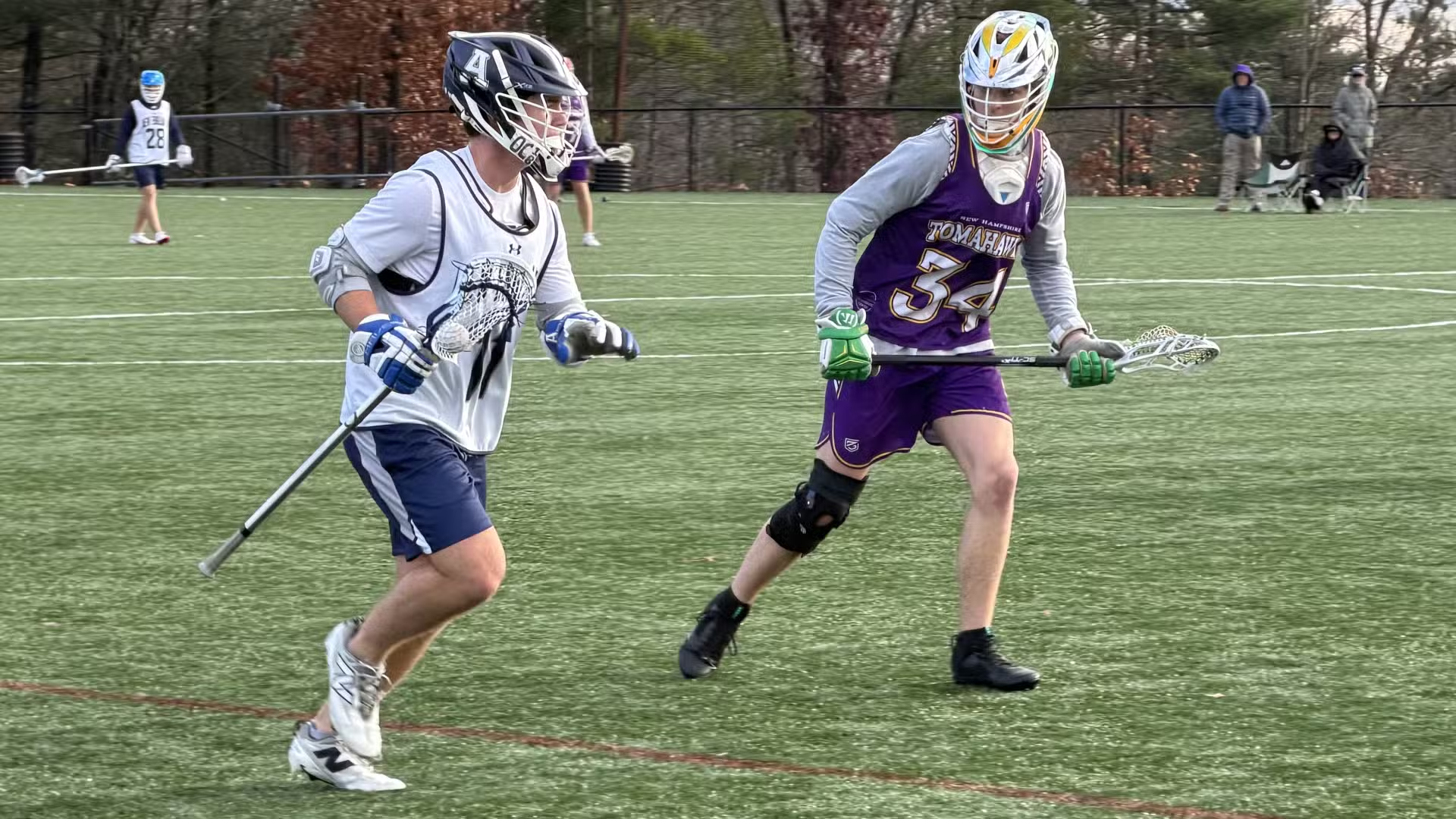

The fall tournament season is just about over.
This past weekend, PrimeTime hosted the Colonial Clash at UMass, which signaled that the boys showcase circuit in New England is at its end in 2026.
That means there is good news and bad news. The cold winter is coming. But so is the spring scholastic season on the other side.
I covered as many events as I could this fall, including a Road to Prep and 3D New England tournament and a trio of PrimeTime showcases. I saw as many teams and players as I could.
And so did college coaches.
The fall club slate is a little more relaxed than the summer. A lot of players are multi-sport athletes who prioritize other sports in the fall. School is back in session, too. But college coaches and evaluators still made it out to these events in droves.
Take this past weekend, for instance. Over 75 coaches and recruiters made their way to Amherst, Mass., for the Colonial Clash. It got me thinking: What is it exactly that these coaches look for at events like this? What is their approach?
I talked to three college coaches about what they look for on the offseason recruiting trail.
COLONIAL CLASH COVERAGE: '28 standouts | '29 standouts
In a general sense, there are factors that all coaches look for, regardless of position. It starts with compete level.
“I think for most coaches in the fall, you want to look for guys who compete,” said Sacred Heart head coach Jon Basti. “You want to look for guys who are consistent in their compete level and guys who show from game one to game three on a Sunday afternoon or Sunday morning that they’re going to bring the same energy as they did.”
Boston University assistant coach Jack Rowlett echoed a similar sentiment.
“I like the kids that show up at 8 a.m. ready to play,” Rowlett said. “It’s going to translate in college. Whether it’s an early morning lift, whether it’s a practice in the morning or stuff like that. I want guys who, the moment they wake up, they’re ready to go get somebody.”
At these events, most of the coaches sit alongside the sidelines adjacent to the benches.
“So we can hear teams going onto the bench,” Basti said. “I think that when you see those guys and you see kids that are doing things the right away or are trying to, those guys are the ones who jump off the page.”
In terms of on-field play, first-year Bentley head coach Kevin Gould looked for three things this fall: speed, skill and lacrosse IQ. But there are more specific qualities he looked for depending on each position. Defensively, he said traits like awareness and supporting teammates off-ball are important.
“You’re looking for the pace at which guys are playing,” Gould said. “The guys that don’t take any chance to relax. They’re just always engaged and always ready to support each other.”
And even on defense, Gould had his eyes peeled for skill.
“Defensively, that’s a really important element to me,” Gould said. “I probably won’t recruit guys that are just big, strong cover guys but struggle to pick up the ball or clear the ball.”
Rowlett said elite skills such as picking up ground balls, killing possessions or intercepting passes in the air are attributes that can separate a player from his peers.
“Guys can learn to get better on the ball, play better angles, learn to have better contact points and stuff like that,” Rowlett said.
Ultimately, every college team plays a different way. That means coaches are looking for unique things that fit their specific system. Rowlett said recruiting based on systems and play style is especially true on offense to replace outgoing classes that possessed similar skills.
“At BU, we’re a heavy 10-man team, we’re a heavy transition offensive team and we play at a really fast clip,” Rowlett said. “So we want to find kids who can throw one more. I don’t need guys who are holding onto the ball for 10 seconds and trying to throw skips to the back pipe. I want to see you in transition catch the ball and not even look, but know where the next pass is.”
Gould said the hardest aspect of recruiting is the specialty positions. Fundamentals, he said, are pivotal for goalies. Trusting skills and habits in the crease will keep goalies from guessing — a habit that will only be exposed at the collegiate level.
“One of my notes that I often take on goalies is they’re making bad shots look easy to save,” Gould said. “And not making these incredible saves on bad shots. Making easy plays look easy.”
Regarding the faceoff position, Gould said the program has looked for players who are different from one another for matchup purposes.
“We have four guys on our roster right now, and we’ll probably play all of them based upon our matchup,” Gould said. “Because they’re all so different.”
3D FALL CLASSIC COVERAGE: '29 standouts | uncommitted '28 standouts | showcase standouts
This brought me to my next question: What age groups did these coaches look at? The resounding answer, unsurprisingly, was the ‘28s. Division 1 programs became eligible to recruit juniors on Sept. 9.
Rowlett said the fall is a good time to watch the players who have already committed to BU while continuing to evaluate other talent in case of decommitments. Rowlett said BU finished its ‘28 class in October, which included nine players, according to Inside Lacrosse.
“Just in the unfortunate circumstances that we do get a kid poached, we just like to be ready to make the next move,” Rowlett said.
There is also one aspect of the recruiting process that sometimes gets overlooked. A commitment is never the end of one’s recruiting process. What happens after is just as important.
“We want a guy who is thrilled to commit, but now it’s like, ‘Can I start as a freshman? Can I come here and compete right away?’” Rowlett said.
For a Division 2 school like Bentley, Gould is still actively recruiting the ‘28 class. And with new NCAA eligibility rules and roster caps, Gould said they are targeting Division 1 caliber players.
“I think with Division 1 having the 48 roster cap and potentially not taking as many goalies or faceoff guys or trying to create some room for fifth years, we can’t just wait around,” Gould said.
Players can always catch the attention of coaches with their on-field play at these tournaments. But all three coaches said they approach these events with players they are interested in. Communication with club or high school coaches is a big piece of getting on a college coach’s radar in the first place.
“It’s important to have someone in your corner that has a good relationship with coaches and can reach out on your behalf,” Gould said. “I think that’s really important.”
Emails directly from the player are another useful way to make a first impression.
“Giving a coach a heads-up that you’re going to be playing for X team this weekend is not a bad thing,” Basti said. “Especially since rosters are so fluid in the fall for all these events.”
Added Rowlett, “If you like BU, and we see you at an event, the first thing I’m going to do is go to my email and see if he already emailed us.”
And beyond the traditional club circuit, there are other ways to play in front of college coaches. Official prospect days, Rowlett said, are a great avenue to impress a staff.
“We have probably taken one to two kids in recruiting from almost every prospect day that we’ve had,” Rowlett said. “Two of our best freshmen right now, we saw for the first time when they were freshmen in high school at prospect day.”
But above all, Basti advised players not to panic during a process that is different for everyone.
“If you want to play lacrosse in college, there’s a place for you to do it,” Basti said. “There truly is. You might have to work a little bit harder in finding where that place is, but don’t close the door on an opportunity because you never know when it could work out for you.”