
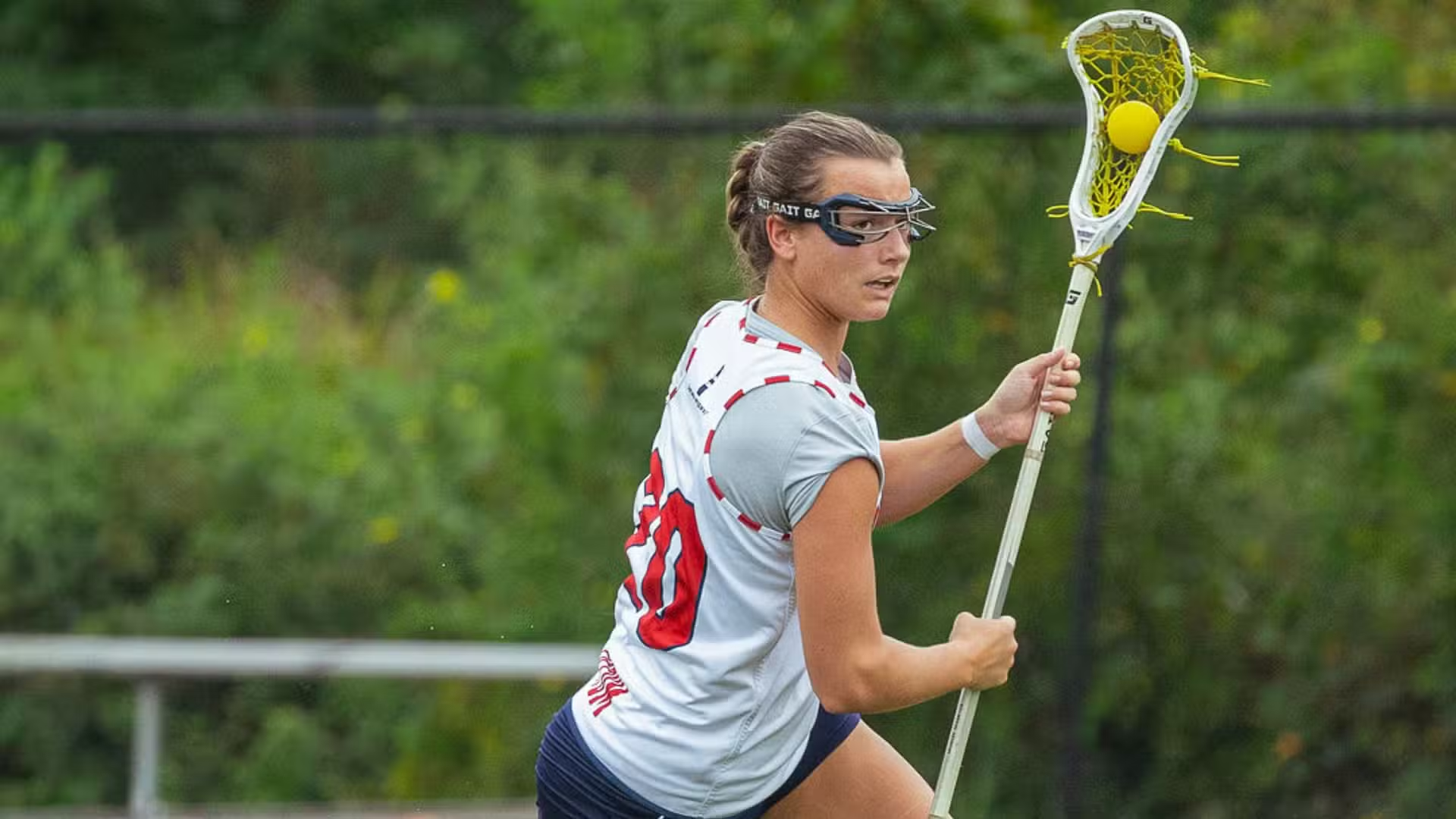

Amelia McHugh (Portsmouth, R.I.) describes the 3d New England Girls program as a “small, boutique North Shore club.”
The sister program of 3d New England Boys, 3d New England Girls operates at a much smaller scale.
The boys program has four teams per age group in their high school classes. It has the nation’s top-ranked 2029 team and the sixth-ranked 2028 team. The best players in the region flock to the club, including Landen O’Neil (Barnstable, Mass.; Duke), the top-ranked player in the class of 2028.
On the other hand, 3d New England Girls only has one team per high school class. McHugh, the girls co-director and recruiting director, likes it that way.
“I don’t want three teams per grad year,” she said.
McHugh knows that 3d isn’t the biggest club, and she leans into it. She focuses on quality over quantity and on ensuring the kids get proper instruction.
“We’re looking for that boutique-type kid that wants one-on-one attention and feedback,” McHugh said.
Co-director Kyra Schwartzman (Kennebunk, Maine) emphasized the same intimate feedback 3d provides.
“Something our coaching staff does an unbelievable job at is giving really concrete feedback and real-time feedback to our athletes,” Schwartzman said.
Schwartzman believes what sets the club apart is its focus on playing within systems. 3d is looking for players who want to be part of a team and who will do the dirty work required to be successful.
“When I think about club ball, like when I played, it’s very much just everyone for themselves, and I think that’s something that we really try to stay away from,” Schwartzman said. “It’s definitely something that we call out.”
During tryouts, the staff is actively looking for which players will have that buy-in to the 3d model.
“A lot of kids just want to show up for themselves, and they want to get those 100 goals in their high school career,” McHugh said. “We’re looking for those kids that want to be clean-up players, and I think you’re able to see that quickly within a tryout.”
In practice, 3d isn’t spending much time focusing on dodging or setting up isolation situations. They spend much of their practice time focused on system-specific details, like player-up and player-down situations, how they crash and how they communicate through recoveries.
“The reality is, for any player, there’s 10 other field players on the field with them, and especially once our girls get to the next level, if you’re only used to doing either everything by yourself or playing hero ball, that’s not really what we’re about as a club,” said Schwartzman.
The feedback that McHugh and Schwartzman have received from coaches is that their methodology leads to an easier transition at the college level.
“The feedback that we get from college coaches is that the transition for our athletes is generally much easier,” said Schwartzman. “The vast majority of our athletes are going on to make an impact of some sort in their first year at college.”
As for the players 3d rosters, McHugh calls them “gems in the rough.”
The pool of players ranges from public school kids to prep schoolers, but many aren’t the stars of their teams.
“We’re typically not getting the best of the best in the state. That’s just the reality of where we are as a club,” said Schwartzman. “Generally, we are getting girls who have a lot of raw talent, but maybe aren’t the number one, number two, number three kid on their high school team.”
There are exceptions, of course. In its ‘28 class, Josie Collins (Hamilton, Mass.; Denver), Elaina Collins (Belmont, Mass.; California) and Dawson Styles (Barnstable, Mass.; Boston University) all made their commitments to high-level Division 1 programs in September. All three have been with the program for a while, arriving before Schwartzman did four years ago.
Madison Goodwin (Burlington, Mass.) became 3d New England’s fourth D1-bound ‘28 on Nov. 25, announcing her commitment to Merrimack.
“I think that’s a testament to the way that we train and the way that we develop players,” said Schwartzman. “We’ve had girls throughout the years that just have that next level, and when they’re at practice, they’re setting the standard.”
Still, 3d suffers from players leaving for other clubs. Eighth and ninth grade tend to be a big turnover point, and 3d lost two of its strongest 2030s this year. Schwartzman knows that her club doesn’t have some of the clout that other programs do, but she feels strongly that the 3d philosophy is one that works, and some of its recent commitments are proof of that.
“If you focus on club rankings and you focus on wins and opponents, sure. I mean, we’re not that attractive of a club,” Schwartzman said. “I’m probably in the minority of people who run a club that don’t care about club rankings. To me, it’s about putting your athletes in the best position to succeed.”
Schwartzman may be underselling the club a little. While 3d New England’s club ranking doesn’t reach the same level as a couple of other clubs in the region, the ‘28s still finished the 2025-26 year ranked 66th in the nation and third in Massachusetts.
Aside from its Division 1 commitments, Pieper Tosh (South Hamilton, Mass.) committed to Ithaca College two weeks ago. Ella Croom (Medford, Mass.), Zoe Dwyer (Marblehead, Mass.), McKenna Mohr (North Andover, Mass.), Bailey Shepherd (South Hamilton, Mass.) and Olivia Tatum (Topsfield, Mass.) are all standout uncommitted players.
“We definitely do go unnoticed,” said McHugh. “But we have those sneaky secret weapons.”
But the ranking isn't the point. 3d New England will continue preaching its team-oriented style, and the results will likely follow.
"We're not for everybody," said McHugh. "But we're for the right kid, and that's what we're looking for."